
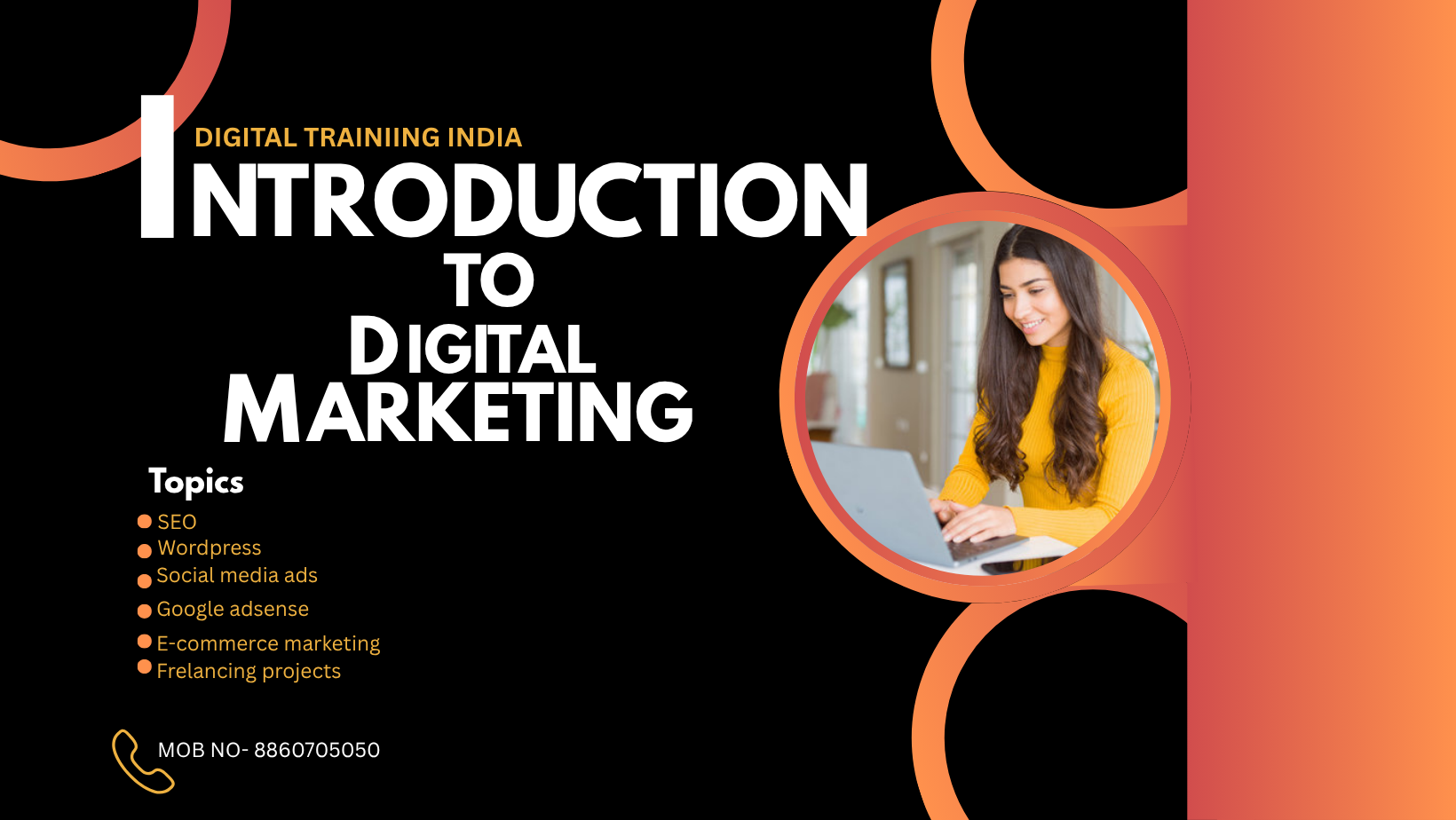
Introduction to Digital Marketing
Introduction to digital marketing has become a key of any successful business strategy. When you are a small startup or an established brand, the importance of digital marketing is to connect with customers . As the internet continues to influence our lives, businesses must adapt and innovate to maintain visibility, engage their target audience, and ultimately grow. This article provides a comprehensive overview of digital marketing, exploring its definition, importance, and the key strategies businesses can use to succeed in the digital landscape.
What is Digital Marketing?
Introduction to Digital marketing means the use of online channels, platforms to promote products, services, or brands. Unlike traditional marketing methods, which rely on print, TV, radio, and direct mail, digital marketing uses the internet and electronic devices to connect with consumers. Introduction to digital marketing including search engine optimization (SEO), content marketing, social media marketing, email marketing, pay-per-click (PPC) advertising, and more.
As the digital space continues to increase, so too does the scope and importance of Introduction to digital marketing. From websites and mobile apps to social media platforms and email campaigns, businesses have a many of ways to engage with consumers. The ability to reach a global audience, track campaign performance, and personalize customer interactions are just a few of the reasons digital marketing has become an essential tool for businesses of all sizes.
What is advantages of digital marketing
- Global Reach
One of the key advantages of digital marketing is the ability to reach more and diverse audience across the world. In the past, businesses had to depend on traditional advertising methods, which were often limited by geographic location and budget constraints. However, with digital marketing, a small business in any corner of the world can access a global market. Whether through social media platforms, search engines, or online advertising, the internet has created unprecedented opportunities for businesses to extend their reach.
- Cost-Effective
For businesses small and medium-sized enterprises (SMEs), digital marketing offers a cost-effective option to traditional marketing methods. Television ads, print campaigns, and billboards are example of traditional marketing , especially for businesses with limited budgets. The digital marketing strategies such as social media campaigns, content creation, and email marketing can be executed with lower costs, making them ideal for businesses looking to maximize their marketing spend.
The digital marketing is cost effective means achieve desire goal in less money.
- Measurable Results
One of the most significant advantages of digital marketing is the ability to measure the results . The data allow the user to check the impact of campaign their result and improve performance .
- Targeted Marketing
With digital marketing, businesses can use advanced targeting techniques to ensure their marketing efforts reach the right audience. For example, through tools like Google Ads or Facebook Ads, businesses can define their target audience based on demographics, interests, location, and behavior. This ability to zero in on specific groups ensures that marketing messages resonate with individuals most likely to convert, leading to higher engagement and better conversion rates.
- Increase Customer Engagement
Another key advantage of digital marketing is the ability to engage directly with customers. Whether through social media platforms, email, or live chat on websites, businesses can interact with their audience in real-time, answer queries, gather feedback, and foster a deeper connection with consumers. This level of direct communication builds trust and loyalty, which can ultimately lead to increased sales and long-term customer retention.
Key Components of Digital Marketing
Digital marketing is a broad field, encompassing a variety of strategies. Below, we explore some of the key components that make up a successful digital marketing strategy.
- Search Engine Optimization (SEO)
SEO is the process of optimizing a website and its content to rank higher in search engine results pages (SERPs) for relevant keywords. When done correctly, SEO can significantly increase a website’s visibility, driving organic (non-paid) traffic from search engines like Google. Since consumers tend to trust search engines to find products or services, ranking higher for targeted keywords is crucial for businesses looking to drive traffic and generate leads.
There are two main aspects of SEO: on-page SEO and off-page SEO. On-page SEO involves optimizing elements on your website, such as meta tags, headings, and content, to make it more search engine-friendly. Off-page SEO, on the other hand, focuses on building high-quality backlinks from other websites, which helps improve your website’s authority and ranking.
- Content Marketing
It involves creating valuable and relevant content—such as blog posts, videos, podcasts, infographics, and more—to attract, inform, and engage your audience. Content marketing helps build brand authority and trust, while also driving traffic to your website.
In addition to driving traffic, content marketing also plays a key role in SEO. By producing high-quality content around relevant keywords, businesses can increase their chances of ranking higher in search engine results, leading to greater visibility and engagement.
- Social Media Marketing
Social media marketing leverages platforms like Facebook, Instagram, Twitter, LinkedIn, TikTok, and YouTube to connect with audiences, promote content, and build brand awareness. Social media marketing is essential for fostering customer engagement, as it allows businesses to directly interact with their audience, share updates, run promotions, and respond to customer inquiries.
Paid social media campaigns, including sponsored posts or ads, allow businesses to further amplify their reach by targeting specific audiences based on various criteria like age, interests, and online behavior. This can help drive traffic to websites and increase conversions.
- Email Marketing
Email marketing is one of the most powerful forms of digital marketing for building relationships with customers and nurturing leads. It involves sending targeted emails to individuals who have expressed interest in your products or services. Email marketing can be used for a variety of purposes, such as sending newsletters, promoting special offers, or reminding customers of abandoned shopping carts.
One of the key advantages of email marketing is its ability to personalize communication. By segmenting your email list and sending tailored messages based on customer preferences or past behavior, you can increase the chances of driving conversions.
- Pay Per Click Advertising (PPC)
PPC advertising is a paid form of digital marketing where businesses pay a fee each time their ad is clicked. Google Ads, Bing Ads, and Facebook Ads are popular platforms for PPC campaigns. The beauty of PPC is that it allows businesses to get immediate visibility on search engines and social media platforms.
Unlike organic SEO, where ranking takes time, PPC provides instant results by placing ads at the top of search engine results pages or within users’ social media feeds. However, it requires careful management to ensure that campaigns are cost-effective and deliver a good ROI.
- Affiliate Marketing
Affiliate marketing is a performance-based strategy where businesses reward affiliates (partners) for driving traffic or sales to their websites. This model allows businesses to tap into the affiliate’s audience and leverage their influence to drive sales. Affiliates earn a commission based on the sales generated through their unique referral links.
Conclusion
In conclusion, digital marketing is a vital component of any modern business strategy. The rapid rise of the internet and digital technologies has transformed how businesses interact with consumers, making it essential to embrace digital marketing tactics to stay competitive. From search engine optimization and content marketing to social media engagement and paid advertising, the possibilities within digital marketing are endless. By understanding and implementing these key strategies, businesses can increase their online visibility, improve customer engagement, and ultimately drive growth in the digital age.